
Why 30 Days Is the Right Length for a Digital Detox
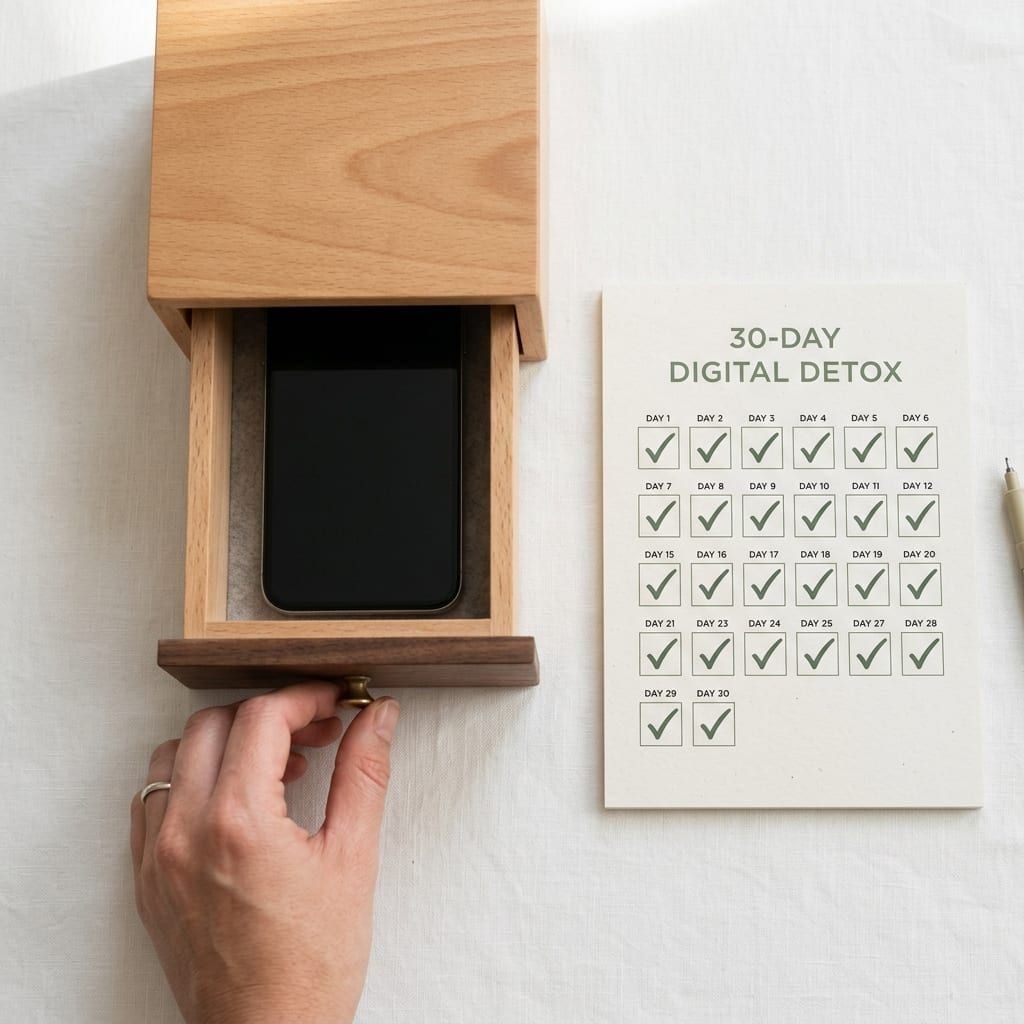
Neuroscience research on habit formation consistently points to 21-66 days as the range required to meaningfully rewire a behavioral pattern. A 30-day digital detox sits squarely in this window: long enough to see real neurological change but short enough to feel achievable. The goal is not permanent abstinence — it is a reset that gives you the awareness and agency to reintroduce technology on your own terms rather than on the algorithm's terms.
Week 1: Audit and Remove (Days 1-7)
The first week is about removing the most addictive elements without going cold turkey. Delete TikTok, Instagram, and any other platform you use compulsively. Keep messaging apps and email but turn off all notifications except calls. You will experience strong withdrawal — boredom, restlessness, and the phantom urge to check your phone. This is normal. It is your dopamine system recalibrating. Replace scroll sessions with short walks, music, or reading.
- Day 1-2: Delete social media apps. Expect discomfort — this is the recalibration beginning.
- Day 3-5: Replace every scroll urge with a two-minute physical activity.
- Day 6-7: Notice how much time you now have. Write down what you are rediscovering.
Week 2: Restore Deep Attention (Days 8-14)
By week two, the acute withdrawal subsides. Your attention span begins to recover. Use this week to deliberately practice sustained focus. Read for 30 minutes without checking your phone. Have a full conversation without glancing at a screen. Complete a single task from start to finish without interruption. These feel effortful at first — that effort is your prefrontal cortex rebuilding the neural pathways for sustained attention.
Week 3: Rediscover Offline Life (Days 15-21)
Most people report a turning point in week three: they stop feeling the pull of social media and start genuinely enjoying the absence of it. Use this week to reconnect with activities you abandoned for screens — cooking, exercise, creative hobbies, time with people you care about. The scientific literature is consistent: these offline activities deliver deeper and more lasting satisfaction than passive scrolling, but your dopamine system needed to reset before you could feel it.
Week 4: Intentional Reintegration (Days 22-30)
The final week is about designing your relationship with technology deliberately. Before reintroducing any app, ask: does this tool serve something I genuinely value? If yes, how do I want to use it without the compulsive patterns returning? This is where Pause becomes essential — install it before reinstalling social media apps so that the mindful friction is in place from day one of reintegration. You have done the hard work. Pause helps you protect it.