
Why Most Screen Time Apps Fail You
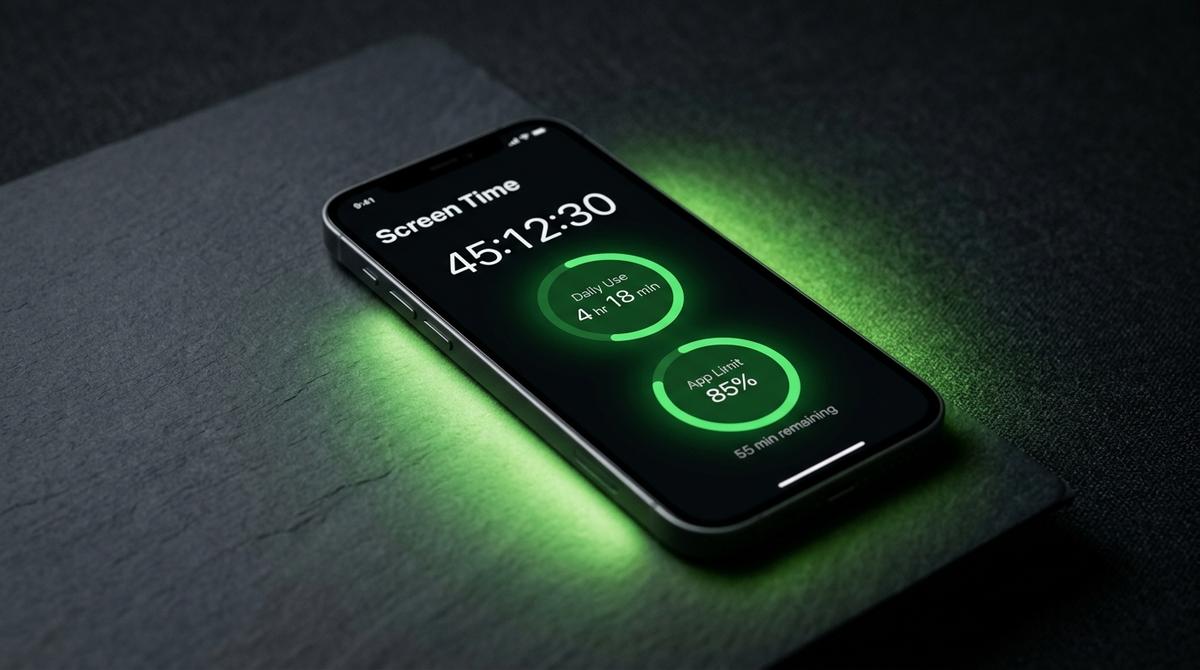
You download an app. You set a limit. You feel productive for two days. Then you tap 'Ignore Limit' for the fourth time that morning and feel worse than before. Screen time apps that rely purely on blocking create a power struggle between you and your own phone — a battle you are psychologically wired to lose. Restriction triggers psychological reactance: the stronger the cage, the stronger the urge to escape it.
The Difference Between Blocking and Changing
There is a crucial distinction between suppressing a behaviour and changing it. Blocking apps suppress — they put a wall between you and the action. Behaviour-change apps shift the underlying habit loop at the trigger level. When you open Instagram out of boredom, a screen blocker says NO. A behaviour-change app asks: 'Is this what you actually want right now?' The second approach respects your agency and produces lasting change.
- Blocking apps require constant willpower to maintain — a finite resource.
- Mindful friction requires only one moment of awareness — a renewable one.
- Habit change research shows friction-based approaches outperform blocking 3-to-1 for long-term adherence.
How Pause Works Differently
Pause does not block your apps. Instead, every time you open a monitored app — Instagram, TikTok, YouTube — it intercepts the launch with a gentle 60-second breathing exercise. In that 60 seconds, you return to conscious awareness. After the breathing, you are free to enter the app — but the compulsive autopilot urge has often passed. This is mindful friction: reducing automaticity without removing your freedom. It works because it targets the Trigger phase of the habit loop, not the Routine.
What Real Users Notice After One Week
Within the first week of using Pause, most users report three consistent changes: they open monitored apps noticeably less often, the sessions that do happen feel more intentional, and they experience less post-scroll guilt. These are signs of genuine habit change, not suppression. After 30 days, many users find they no longer need the 60-second pause because the habit itself has weakened — the automatic trigger no longer fires as reliably.
Try Pause Free — No Subscriptions, No Ads
Pause is completely free, has no ads, and does not sell your data. It is a tool designed to give you back control of your own attention. Download it on iOS and Android and experience the difference between restriction and genuine habit change. Most users notice a real difference in the first 72 hours.